THE AMERICAN CONTINENT’S ARTISTIC SHIFT OF CULTURE FROM ROME AND TSUNAMI BACK
OUR MOMENT OF A PHENOMENAL PLUTO RETURN 4˚50 IN AN UNPRECEDENTED COSMIC WINGSPAN
27 June 2026
The Arrived Aphrodite
3 July 2026 Pluto 4˚50 R Aquarius
The Great Fire of Rome, Began July 18-19, 64 AD
On 19 July 2026: Pluto 4˚ Neptune 4˚ Uranus 4˚
THE REVOLUTION HAS NOT BEEN TELEVIZED.
THROUGH THE MOST POWERFUL LINE OF ART, CULTURALLY INTENTIONALLY SHIFTED BY WILLA CATHER AND AUDREY HEPBURN AND SHOCKINGLY MORE
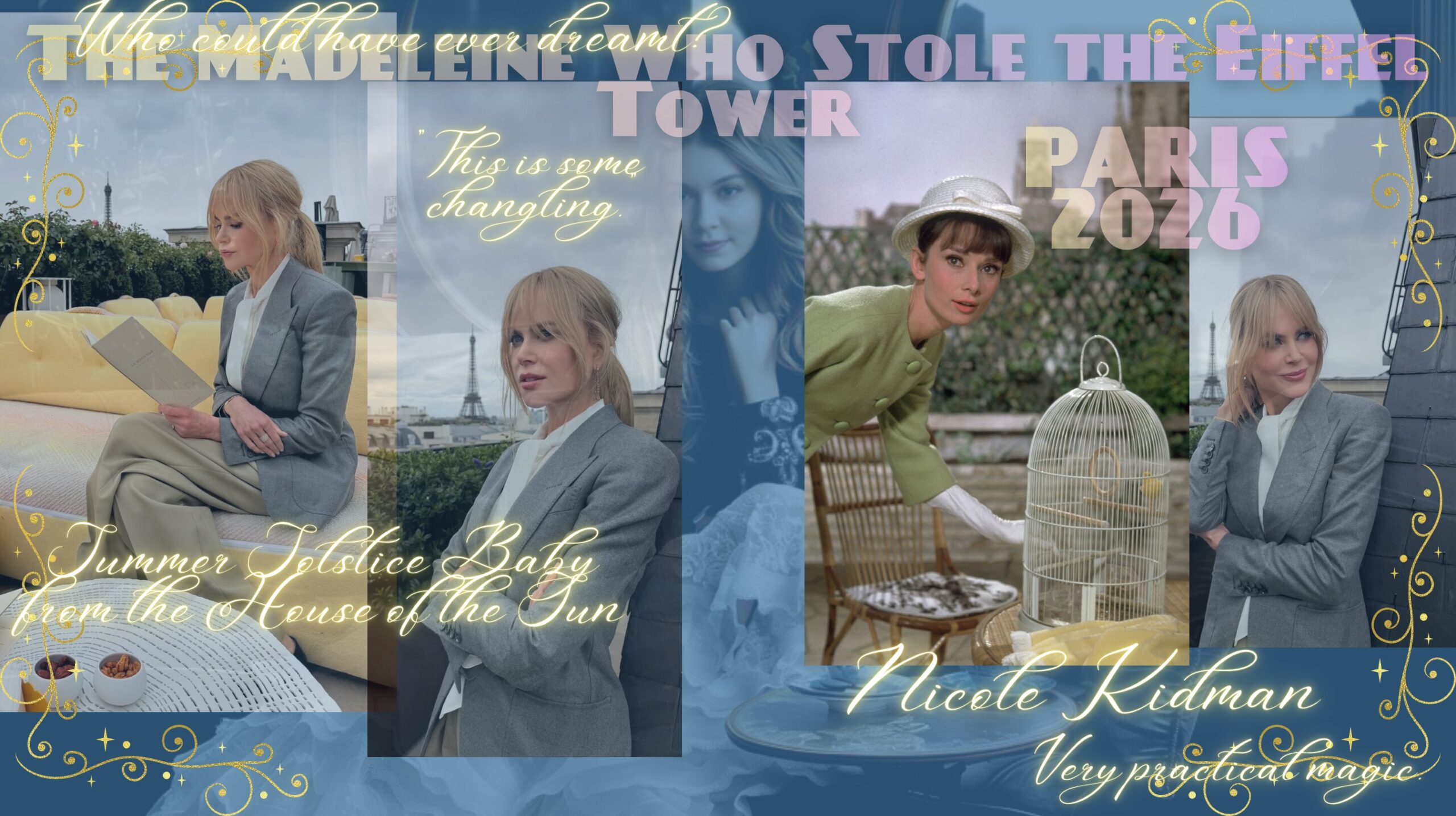
VERY PRACTICAL MAGIC.
WHILE THE MALIGNANT NARCISSISM OF TRUMP AND TAYLOR WERE FORCING YOU TO LOOK AT ONLY THEM.
House of the People.
Non-stop plagiarism from the beginning to now
Non-stop “Shopping” from other people’s lives and creations for a false front
Completely false accusation against John Mayer with non-stop harassment of him
Took the good will of her ill-gotten “collegues” and used it for self-gain
Sought out falsely-gained accolades such as Grammys, “Doctorate,” and “Writer’s Hall of Fame”
Sold it all fraudulently to the public
Still thinks she is hiding it from everyone.
And now as the foundations crack of malignant narcissism, a destined new beginning.
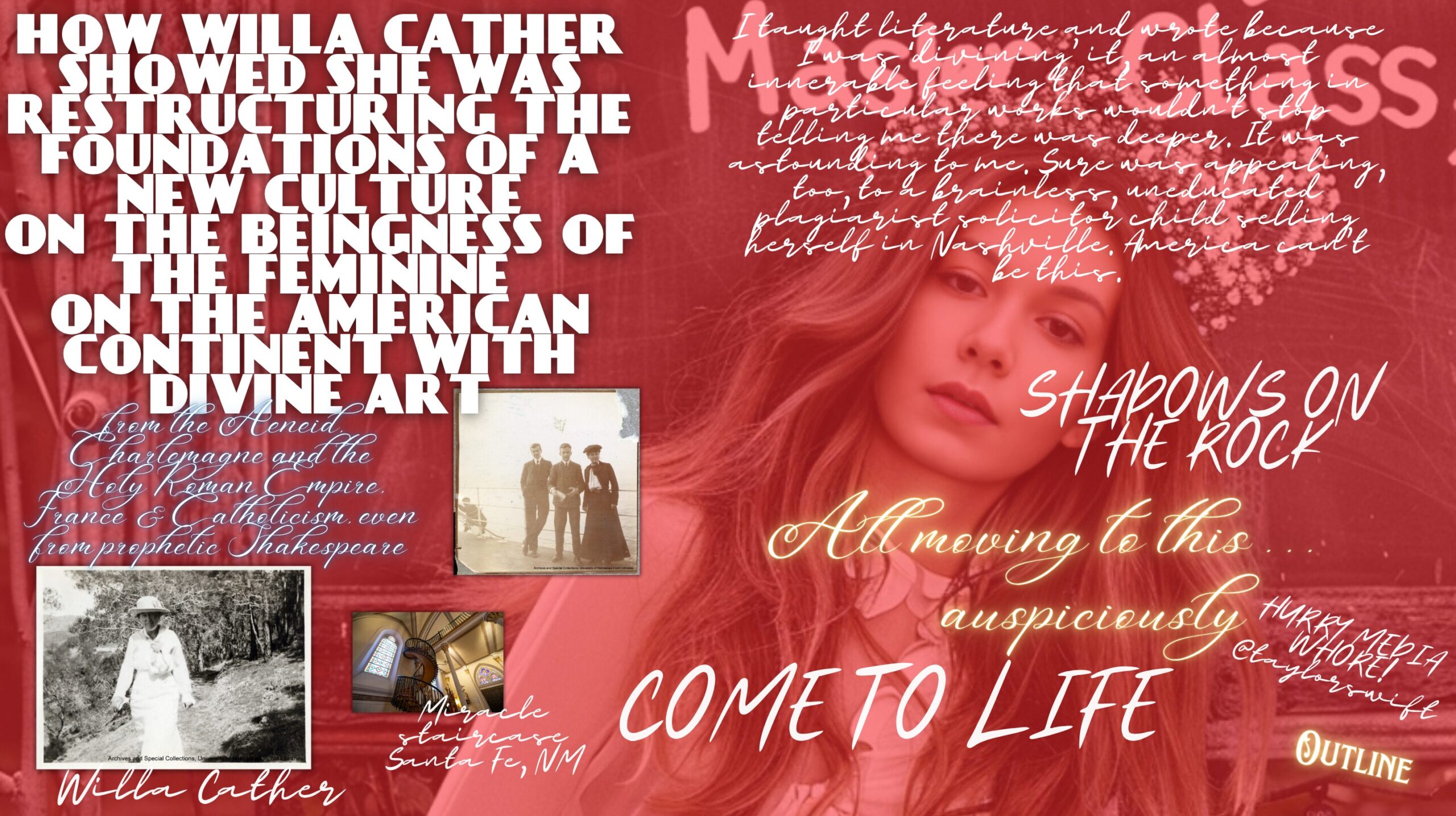
I taught literature and wrote because I was ‘divining’ it, an almost innerable feeling that something in particular works wouldn’t stop telling me there was deeper. It was astounding to me. Sure was appealing, too, to a brainless, uneducated plagiarist solicitor child selling herself in Nashville. America can’t be this.
How Willa Cather showed she was restructuring the foundations of a new culture on the Beingness of the feminine on the American Continent with divine art
from the Aeneid, Charlemagne and the Holy Roman Empire, France & Catholicism, even from prophetic Shakespeare
SHADOWS ON THE ROCK
All moving to this . . . auspiciously come to life.
Outline
HURRY, MEDIA WHORE! @taylorswift
Photos: Willa Cather, Miracle Staircase in Santa Fe, New Mexico
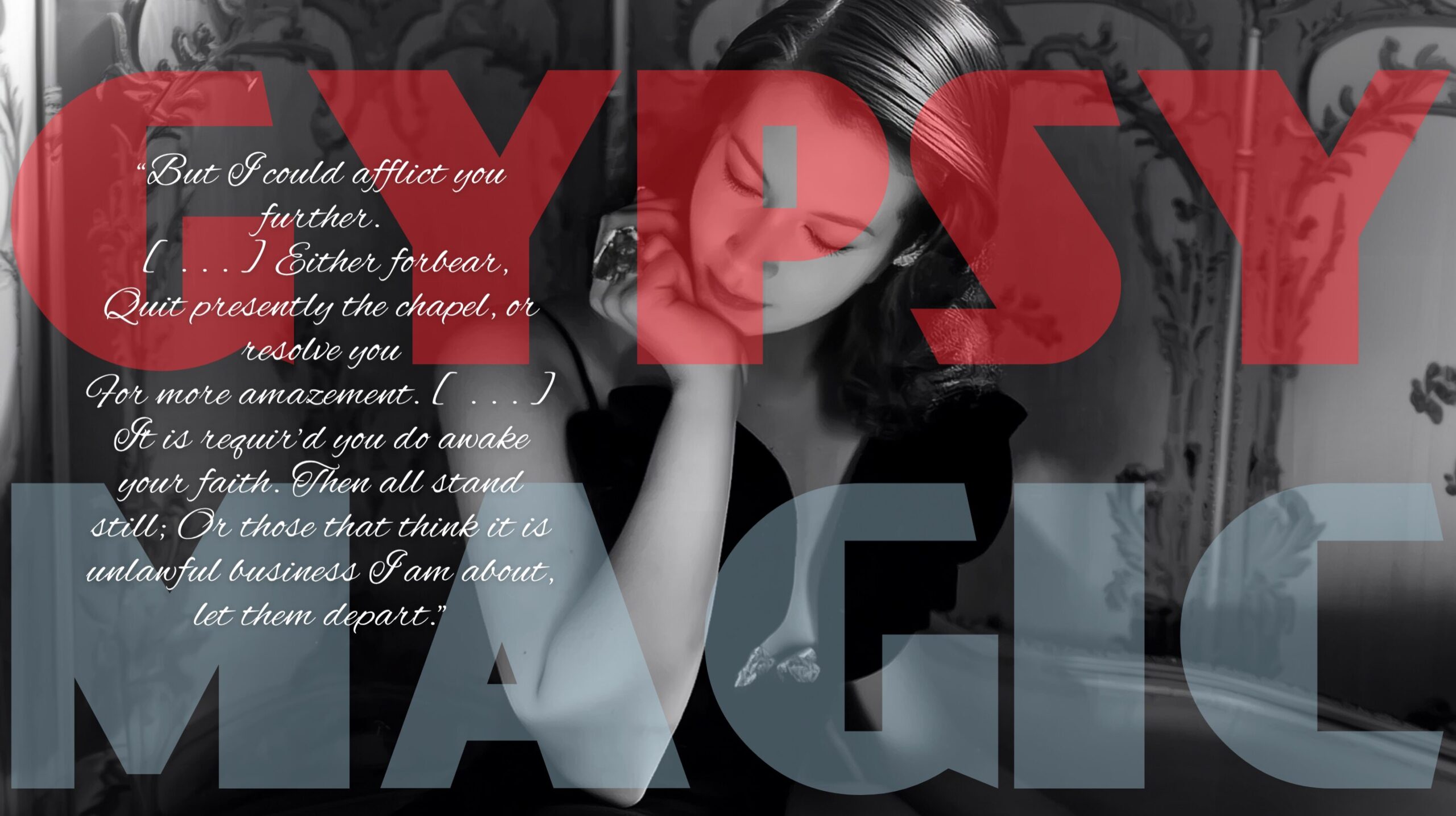
GYPSY MAGIC
“But I could afflict you further.
[ . . . ] Either forbear,
Quit presently the chapel, or resolve you
It is requir’d you do awake your faith. Then all stand still; Or those that think it is unlawful business I am about, let them depart.”
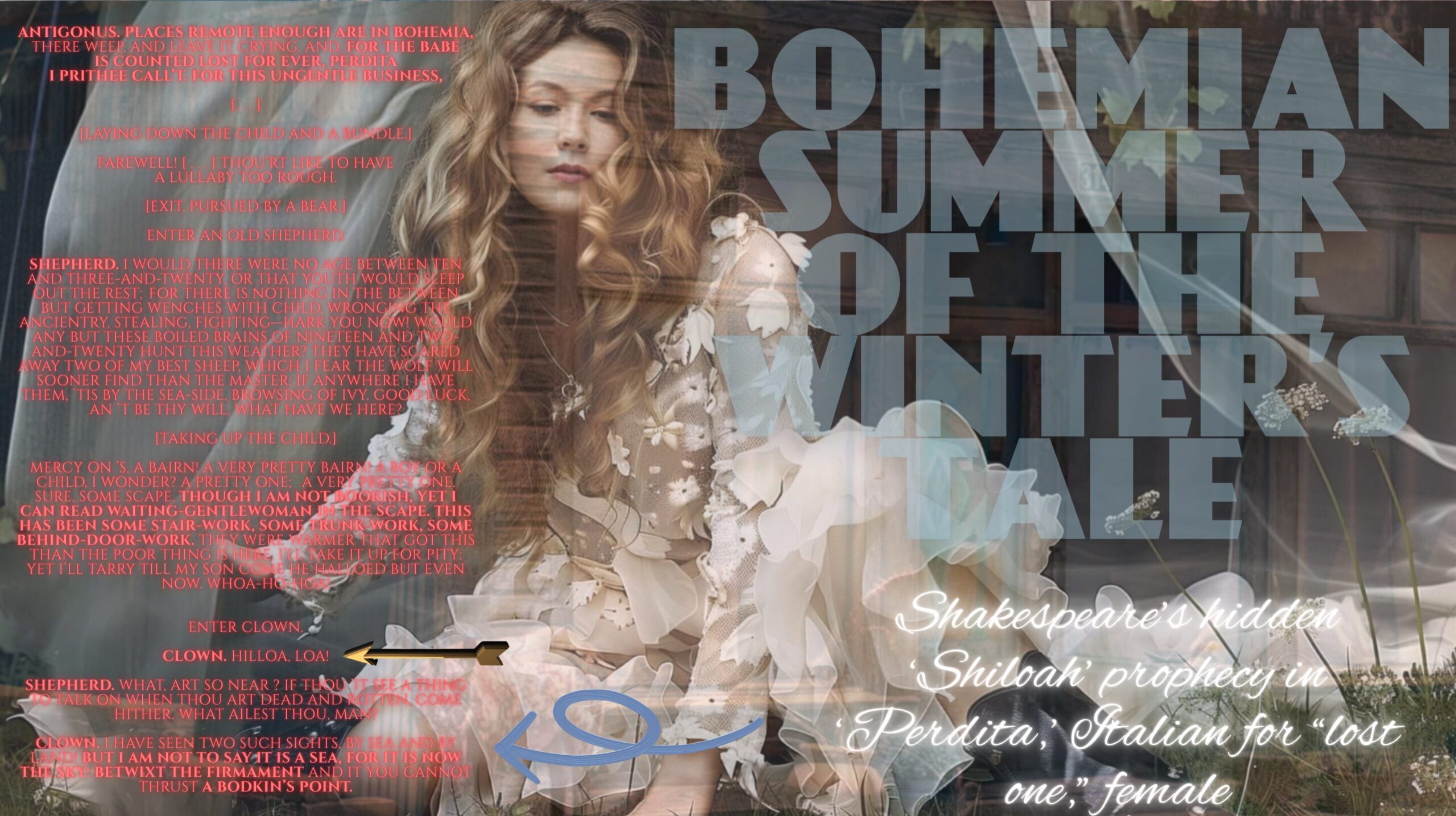
BOHEMIAN SUMMER OF THE WINTER’S TALE
Shakespeare’s hidden ‘Shiloah’ prophecy in ‘Perdita,’ Italian for “lost one,” female:
Antigonus.Places remote enough are in Bohemia,
There weep, and leave it crying. And, for the babe
Is counted lost for ever, Perdita
I prithee call’t. For this ungentle business,
[. . . ]
[Laying down the child and a bundle.]
Farewell! [ . . . ] Thou’rt like to have
A lullaby too rough.
[Exit, pursued by a bear.]
Enter an old Shepherd.
SHEPHERD. I would there were no age between ten and three-and-twenty, or that youth would sleep out the rest; for there is nothing in the between but getting wenches with child, wronging the ancientry, stealing, fighting—Hark you now! Would any but these boiled brains of nineteen and two-and-twenty hunt this weather? They have scared away two of my best sheep, which I fear the wolf will sooner find than the master: if anywhere I have them, ’tis by the sea-side, browsing of ivy. Good luck, an ’t be thy will, what have we here?
[Taking up the child.]
Mercy on ’s, a bairn! A very pretty bairn! A boy or a child, I wonder? A pretty one; a very pretty one. Sure, some scape. Though I am not bookish, yet I can read waiting-gentlewoman in the scape. This has been some stair-work, some trunk-work, some behind-door-work. They were warmer that got this than the poor thing is here. I’ll take it up for pity: yet I’ll tarry till my son come he halloed but even now. Whoa-ho-hoa!
Enter Clown.
Clown. Hilloa, loa!
Shepherd. What, art so near ? If thou ’It see a thing to talk on when thou art dead and rotten, come hither. What ailest thou, man?
Clown. I have seen two such sights, by sea and by land! but I am not to say it is a sea, for it is now the sky: betwixt the firmament and it you cannot thrust a bodkin’s point.
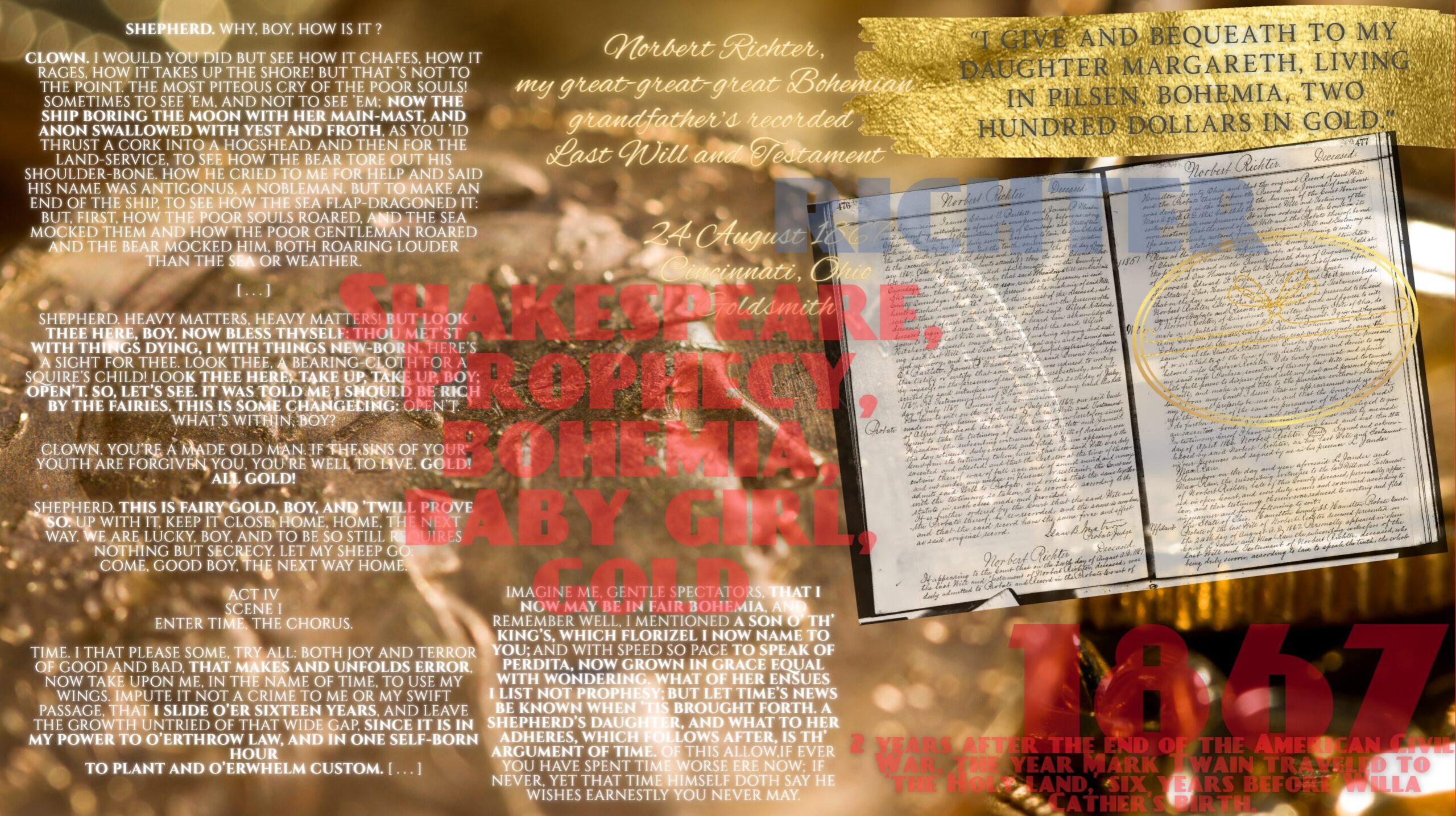
SHAKESPEARE, PROPHECY, BOHEMIA, BABY GIRL, AND GOLD
Shepherd. Why, boy, how is it ?
Clown. I would you did but see how it chafes, how it rages, how it takes up the shore! but that ’s not to the point. the most piteous cry of the poor souls! sometimes to see ’em, and not to see ’em;now the ship boring the moon with her main-mast, and anon swallowed with yest and froth, as you ’Id thrust a cork into a hogshead. And then for the land-service, to see how the bear tore out his shoulder-bone. how he cried to me for help and said his name was Antigonus, a nobleman. But to make an end of the ship, to see how the sea flap-dragoned it: but, first, how the poor souls roared, and the sea mocked them and how the poor gentleman roared and the bear mocked him, both roaring louder than the sea or weather.
[ . . . ]
SHEPHERD. Heavy matters, heavy matters! But look thee here, boy. Now bless thyself: thou met’st with things dying, I with things new-born. Here’s a sight for thee. Look thee, a bearing-cloth for a squire’s child! Look thee here; take up, take up, boy; open’t. So, let’s see. It was told me I should be rich by the fairies. This is some changeling: open’t. What’s within, boy?
CLOWN. You’re a made old man. If the sins of your youth are forgiven you, you’re well to live. Gold!all gold!
SHEPHERD. This is fairy gold, boy, and ’twill prove so. Up with it, keep it close: home, home, the next way. We are lucky, boy, and to be so still requires nothing but secrecy. Let my sheep go: come, good boy, the next way home.
ACT IV
SCENE I
Enter Time, the Chorus.
TIME. I that please some, try all: both joy and terror Of good and bad, that makes and unfolds error, Now take upon me, in the name of Time, To use my wings. Impute it not a crime To me or my swift passage, that I slide o’er sixteen years, and leave the growth untried Of that wide gap, since it is in my power To o’erthrow law, and in one self-born hourTo plant and o’erwhelm custom. [ . . . ] imagine me, Gentle spectators, that I now may be In fair Bohemia, and remember well, I mentioned a son o’ th’ king’s, which Florizel I now name to you;and with speed so pace To speak of Perdita, now grown in grace Equal with wondering. What of her ensuesI list not prophesy;but let Time’s news Be known when ’tis brought forth. A shepherd’s daughter, And what to her adheres, which follows after, Is th’ argument of Time. Of this allow,If ever you have spent time worse ere now;If never, yet that Time himself doth say He wishes earnestly you never may.
Norbert Richter, my great-great-great Bohemian grandfather’s recorded Last Will and Testament
24 August 1867
Cincinnati, Ohio
Goldsmith
“I give and bequeath to my daughter Margareth, living in Pilsen, Bohemia, two hundred Dollars in gold.”
1867
was 2 years after the end of the American Civil War, the year Mark Twain traveled to ‘the Holy Land,’ and six years before Willa Cather’s birth.
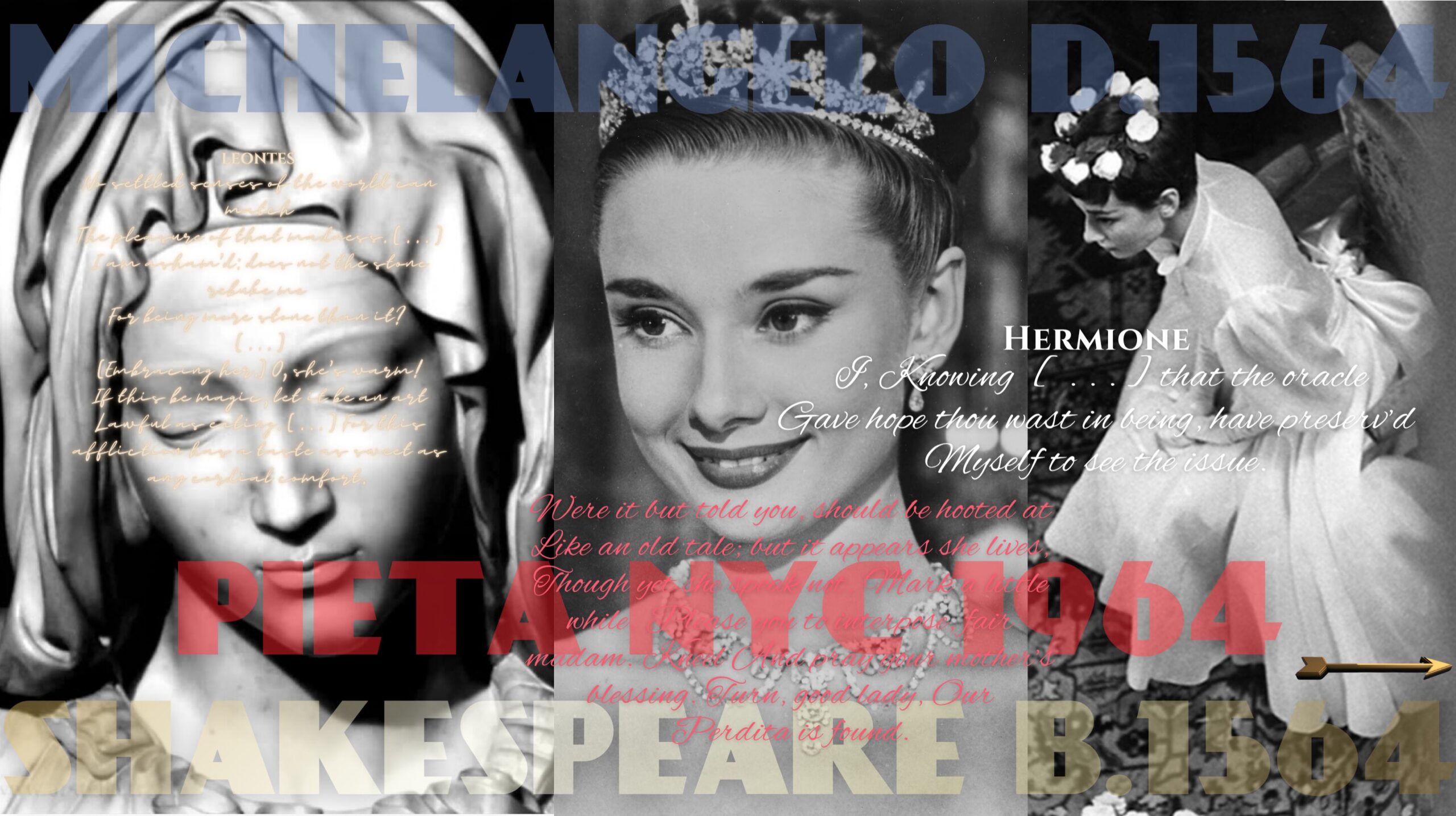
MICHELANGELO D. 1564
PIETA, NYC, 1964 World’s Fair
SHAKESPEARE B. 1564
LEONTES. No settled senses of the world can match The pleasure of that madness. [ . . . ] I am asham’d: does not the stone rebuke me For being more stone than it? [ . . . ] [Embracing her.] O, she’s warm! If this be magic, let it be an art Lawful as eating. [ . . . ] For this affliction has a taste as sweet as any cordial comfort.
[ . . . ]
Hermione. I, Knowing [ . . . ] that the oracle Gave hope thou wast in being, have preserv’d Myself to see the issue.
[ . . . ]
Were it but told you, should be hooted at Like an old tale; but it appears she lives, Though yet she speak not. Mark a little while. Please you to interpose, fair madam. Kneel And pray your mother’s blessing. Turn, good lady, Our Perdita is found.
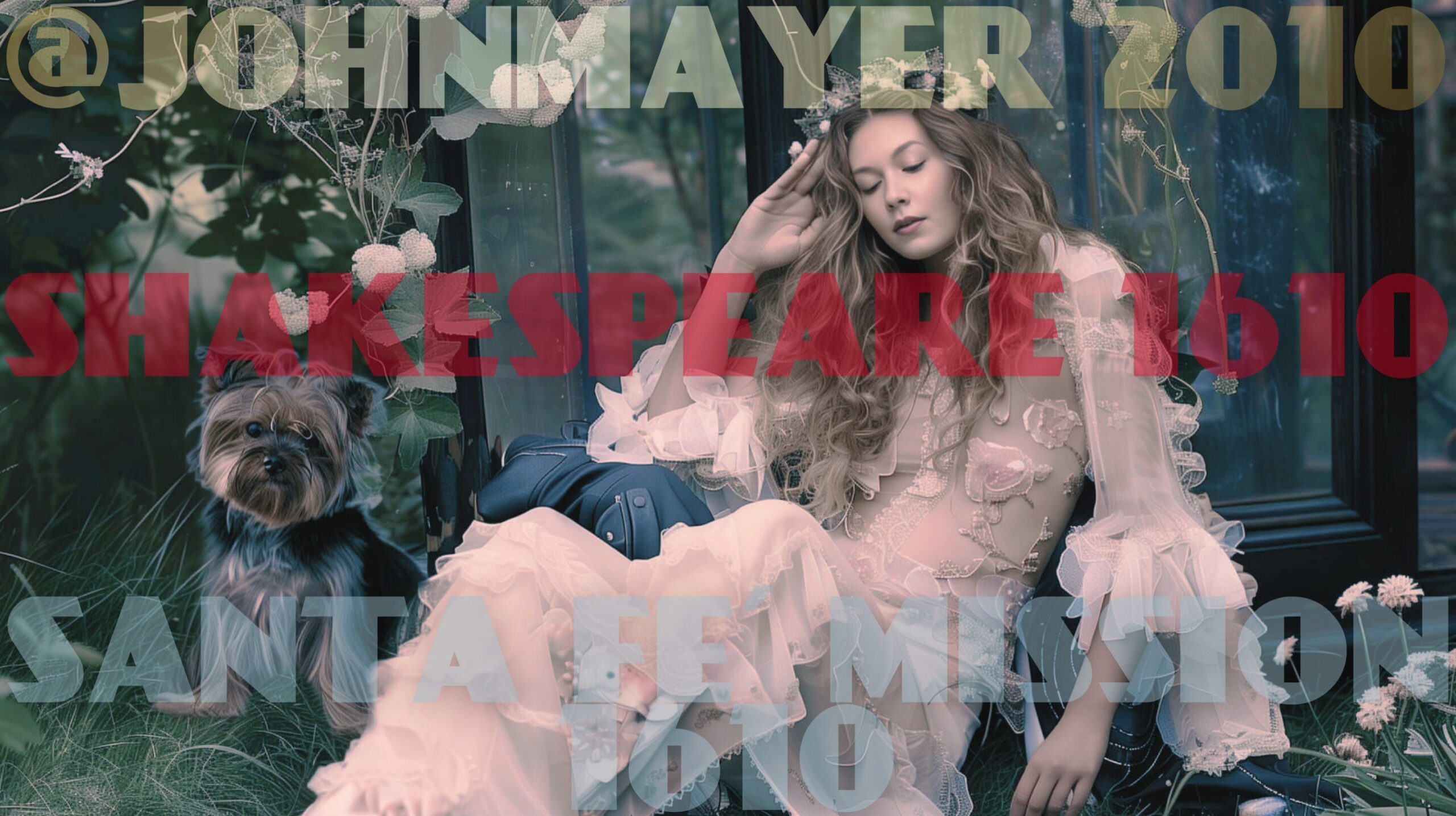
@JOHNMAYER 2010
SHAKESPEARE 1610
SANTA FE´ MISSION 1610
MICHELANGELO 1508
SISTINE
SANTA FE´ MISSION 2008 (My arrival there for the first time.)
Willa Cather takes on the creation of the foundation of a new kind of culture where the basis of the feminine is cultured.
AMELIA, OHIO (my first little house of my own when I was a child) and WILLA CATHER’S SHADOWS ON THE ROCK
There are two Saint Amelias, both with feast day of 10 July, my birthday. According to the University of Notre Dame about St. Amelia, “In her legend, her beauty is said to have caught the eye of the young man who would become King Charlemagne. He became obsessed with Amelia and asked for her hand in marriage. She had dedicated her [body] to God and refused. He persisted, and one day, as she was praying at a church, he tried to pull her away and ended up breaking her arm. In some stories, her arm healed almost instantly, and Charlemagne withdrew his request.”
In her narrative Shadows on the Rock, Willa Cather writes a similar relationship between her characters Pierre Charron and Jeanne Le Ber, who instead of choosing Pierre, chooses to wall herself up behind an altar in a chapel she has built. With the many allusions to Virgil’s Aeneid, especially evident in Charron’s name and that he “shot up and down the swift rivers of Canada in his canoe; who was now at Niagara, now at the head of Lake Ontario, now at the Sault Sainte Marie on his way into the fathomless forbidding waters of Lake Superior.”
Instead of the miracle of her arm healing, it is Jeanne’s spinning-wheel that is broken, and it is the miracle of its being fixed by angels and her weaving that inspires the entire territory of these nascent settlements in Canada. In this Willa also alludes to the Magdalena [and her transference to the continent], and about how miracles “are the actual flowering of desire.” Cécile is parallel to Jeanne le Ber, but she is the life outside of the cathedral, the different foundation and carrying the lineage forward.
In Shadows on the Rock Cécile and her father Euclid Auclair have left behind the culture that is subject to the moods and whims of the “crown”and its favorites, even its unfortunate lineage which Willa alludes to in Marie-Thérèse, Marie Antoinette’s daughter who will be the only family member to live on after the French Revolution. This allusion sets up one of the many paralleling contrasts to the very different new transplanted culture beginning with Cécile and her father.
MY ACTUAL LINEAGE FROM BOHEMIA:
On 22 July 1851 my great-great-great grandfather Norbert Richter signs his naturalization papers in which he agrees to “forever renounce and abjure all allegiance and fidelity to every foreign prince, potentate, state and sovereignty whatsoever, and particularly to the Emperor of Austria.”
In Shadows on the Rock, their plan is to finally return to France so that Cécile can receive a formal education and acculturation. Although they make plans to go, they do not take the ship back.
The year after the Civil War Norbert applied for a passport, in 1866, presumably to go back to Bohemia where one of his daughters, Margareth was . . .
but it doesn’t appear that he went back to Bohemia as he wrote his Last Will and Testament the following year, in 1867, the year he passed.
Nobert was born the very last year, 1805, of The Holy Roman Empire begun by Charlemagne in the late 700s, “The Father of Europe.”
At that very time and place Norbert was a child the Brothers Grimm were there collecting tales for their fairy tales, published in 1812.
Tolstory’s War and Peace was written about this period of the Napoleanic invasion of Russia, the “first half of the book was named 1805”–the year my great-great-great grandfather was born.
Tolstory’s War and Peace was written about this period of the Napoleanic invasion of Russia, the “first half of the book was named 1805”–the year my great-great-great grandfather was born.
AMERICAN CIVIL WAR
His son, Charles R. Richter, fought in The Battle of Shiloh in the Civil War under Ulysses S. Grant, who would become president, and his son, Charles Edward was the president of Richter & Phillips Jewelry in Cincinnati. Together they later met Ulysses S. Grant’s namesake grandson.
Norbert worked at the very place where Lincoln gave a speech on the balcony in Cincinnati in 1859 right before the presidential election and start of the Civil War.
Photos: Ulysses S. Grant, and his mausoleum in Manhattan, the largest one in North America
Ulysses S. Grant’s birthplace is just 9 miles from my first little house in Amelia.
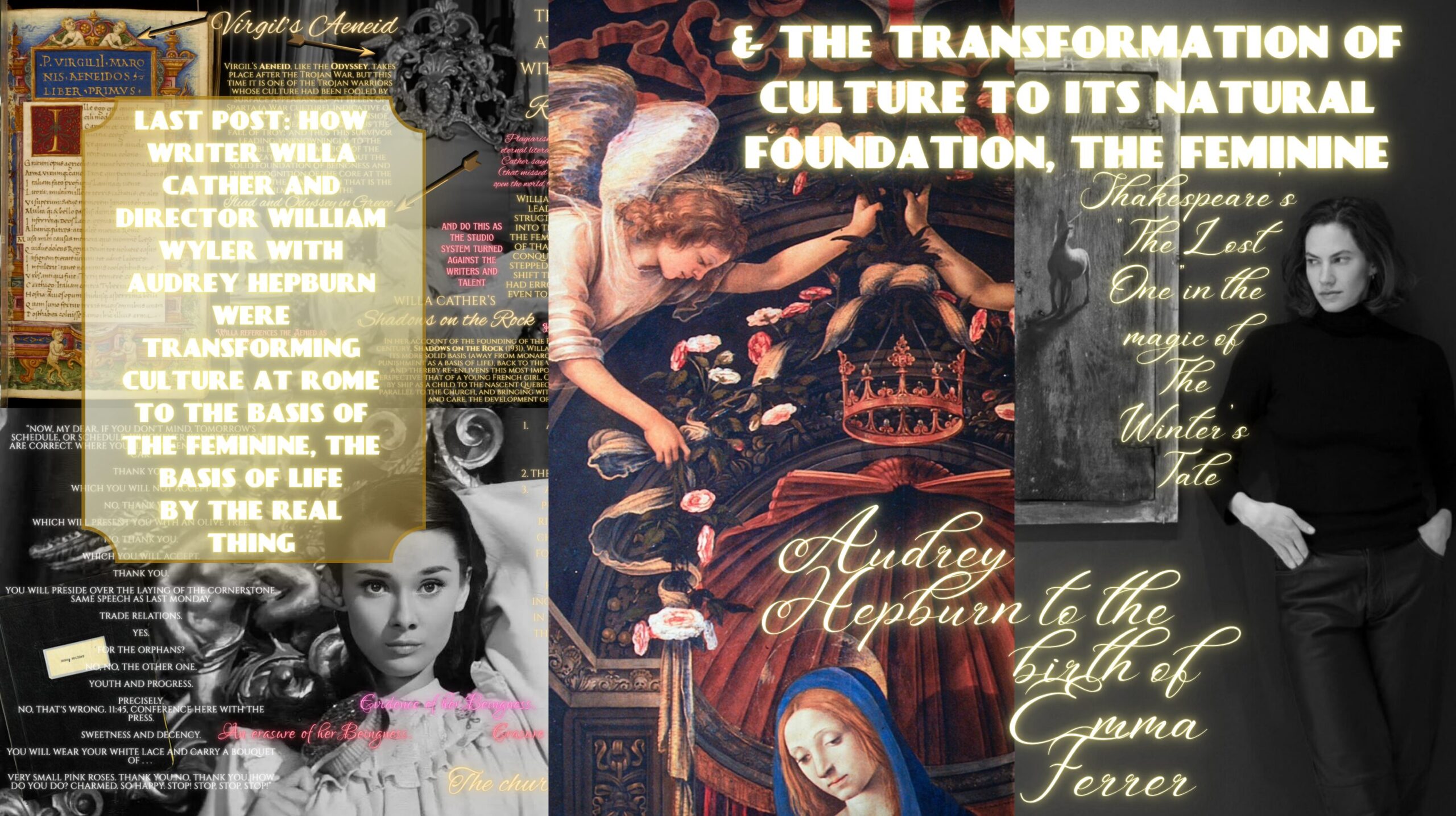
& THE TRANSFORMATION OF CULTURE TO ITS NATURAL FOUNDATION, THE FEMININE
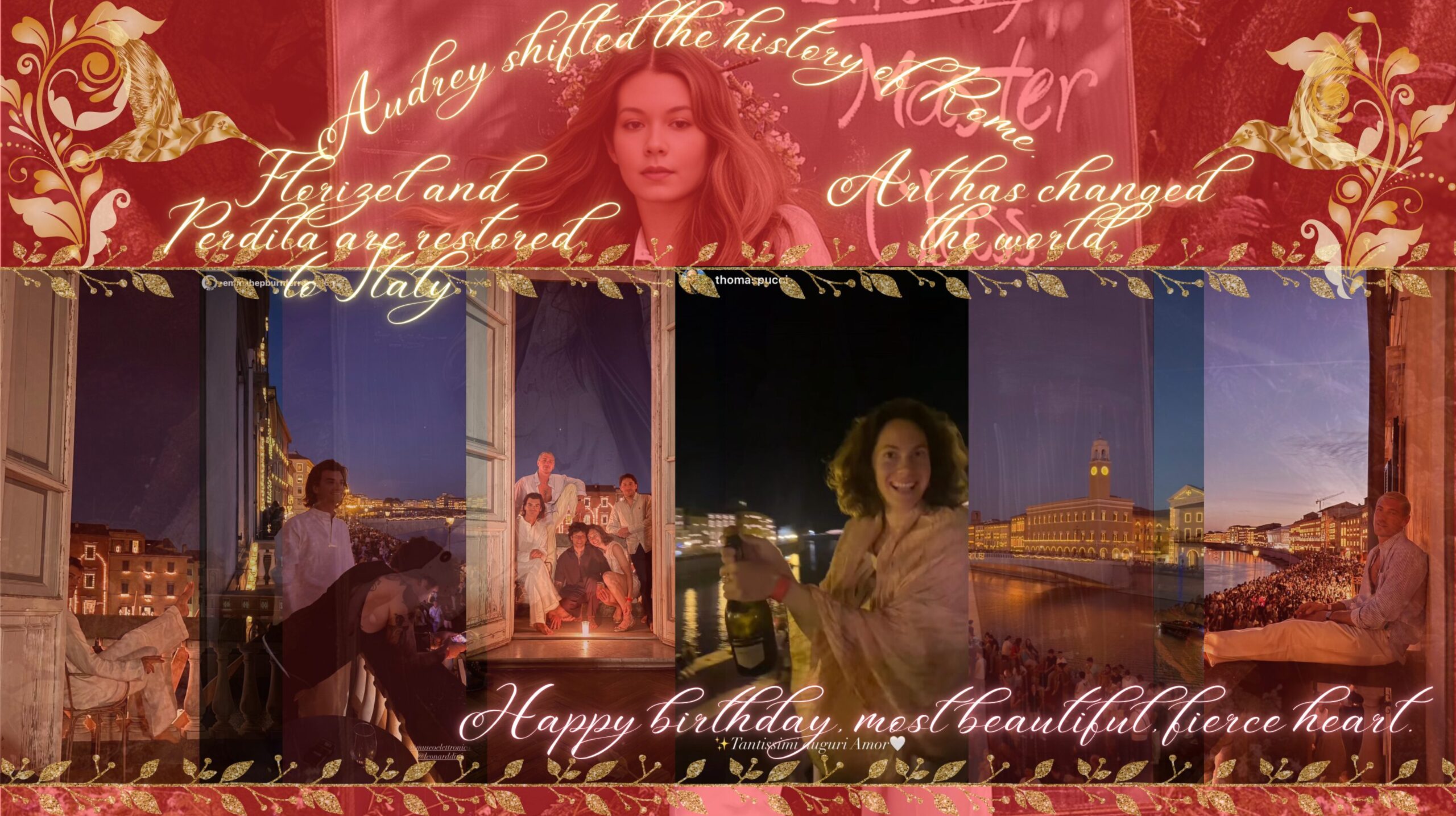
AUDREY HEPBURN TO THE BIRTH OF EMMA FERRER
Shakespeare’s “The Lost One”in the magic of The Winter’s Tale
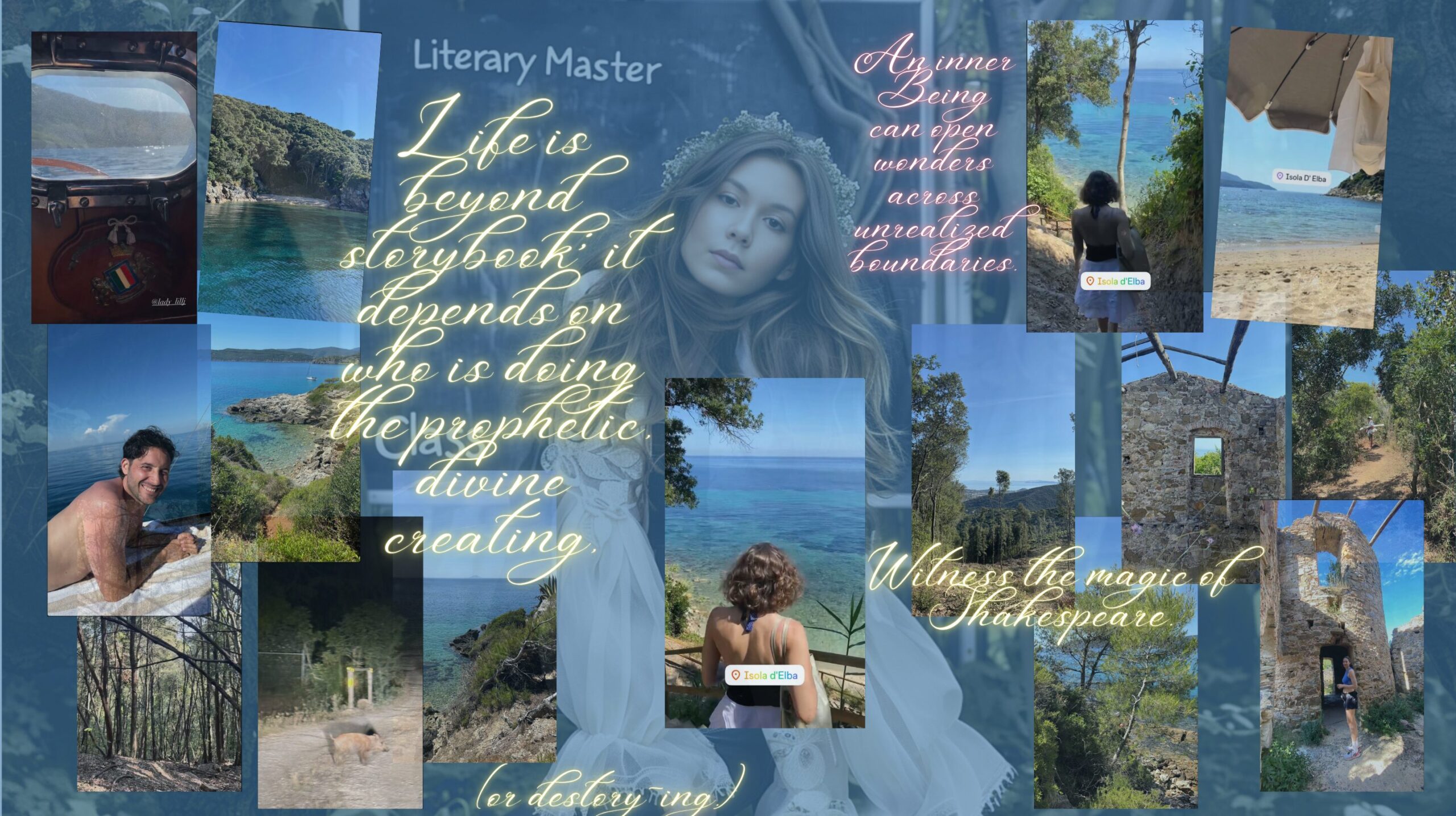
Life is beyond storybook; it depends on who is doing the prophetic, divine creating,
(or de-story-ing)
An inner Being can open wonders across unrealized boundaries.
Witness the magic of Shakespeare.
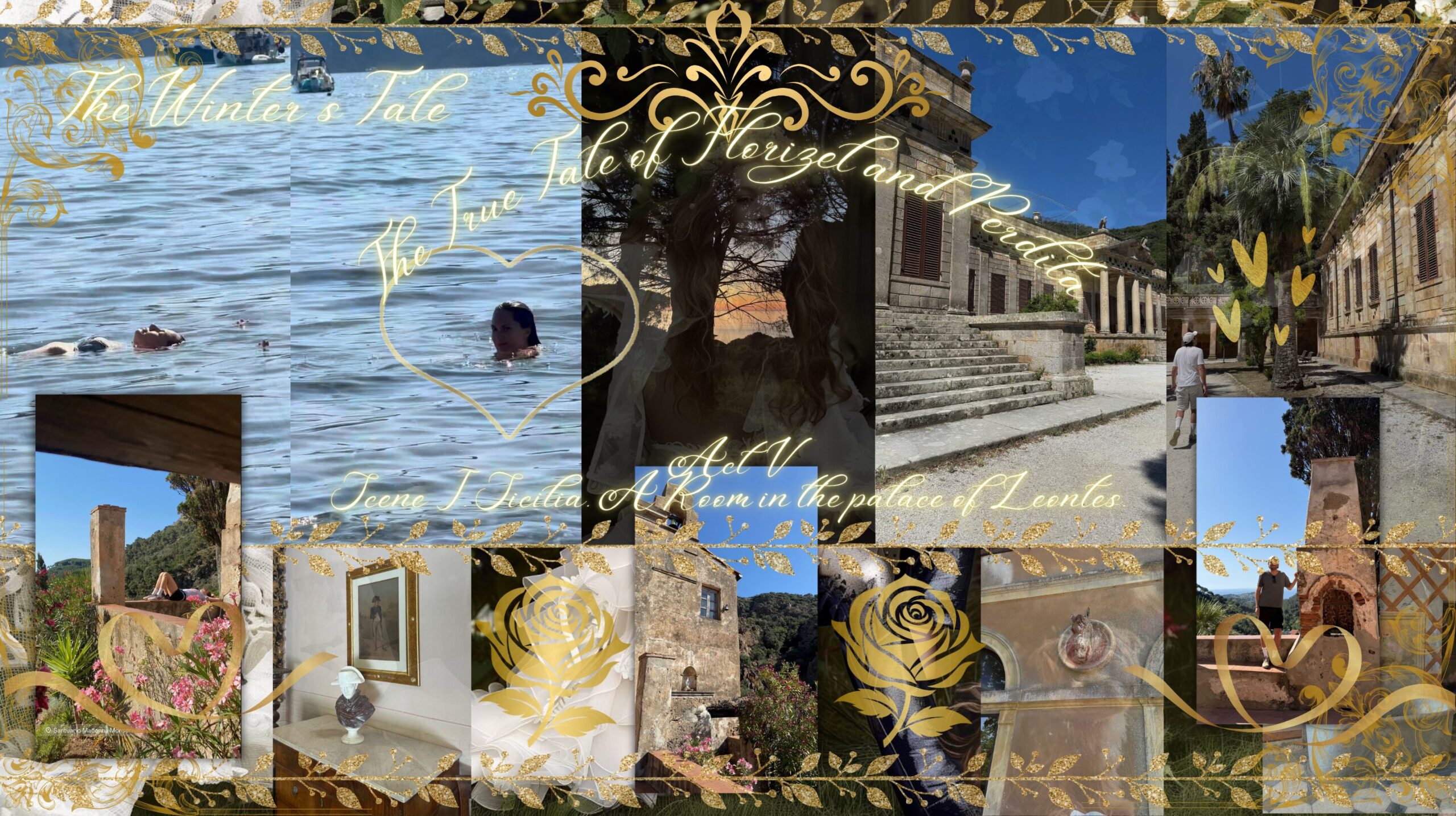
The Winter’s Tale
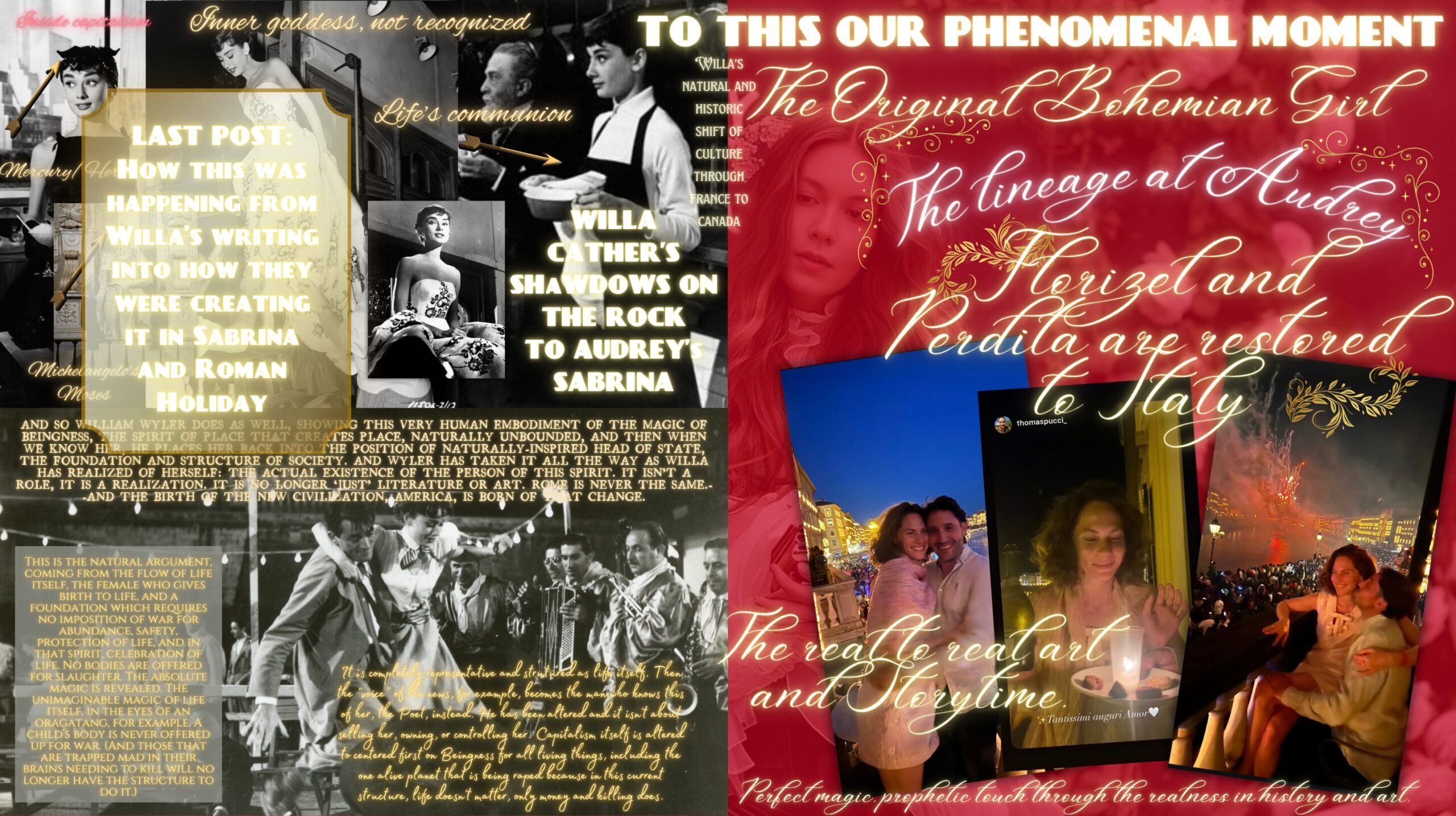
The True Tale of Florizel and Perdita
Act V. Scene I. Sicilia. A Room in the palace of Leontes.
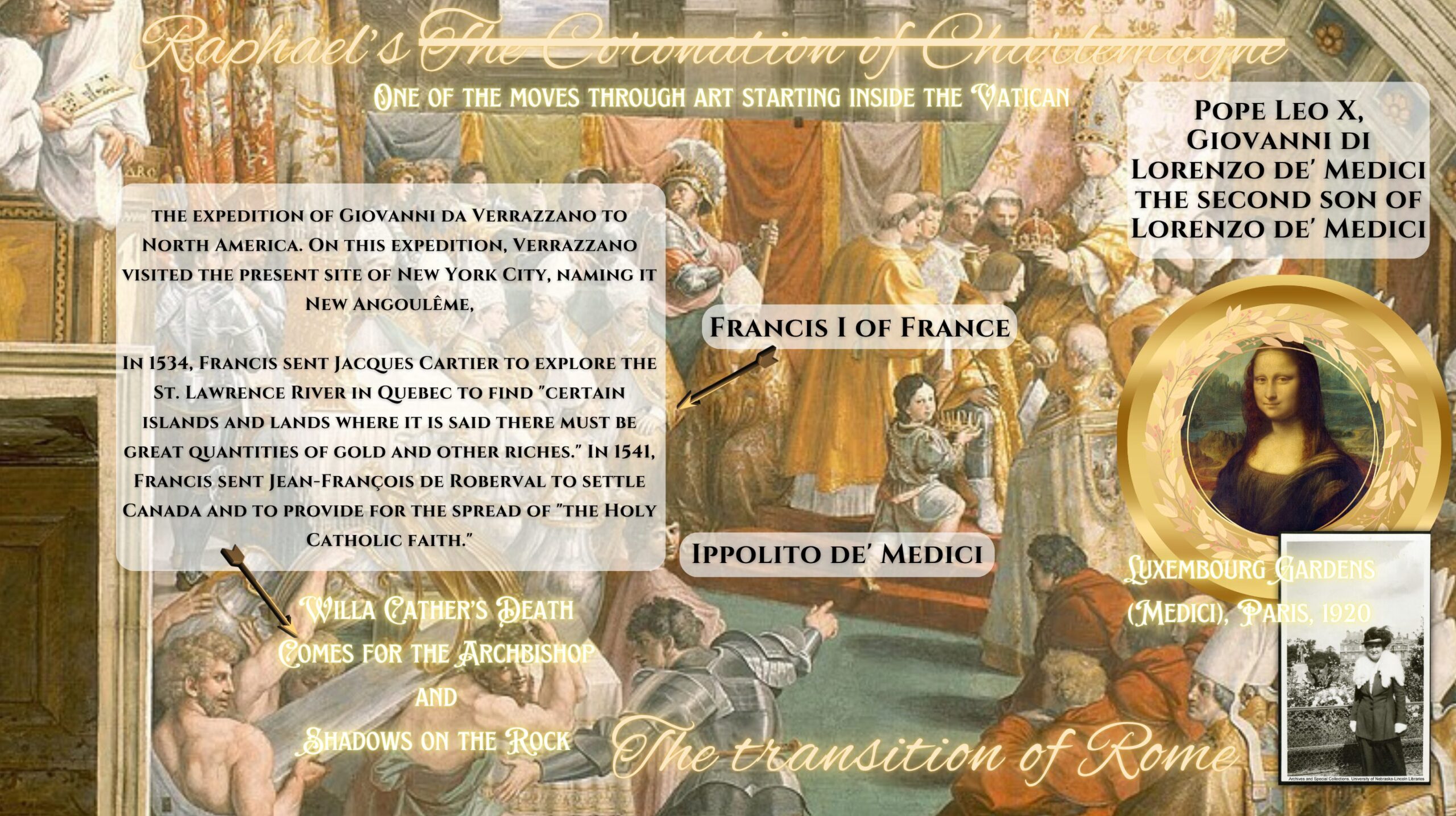
Raphael’sThe Coronation of Charlemagne
The Transition of Rome
One of the moves through art starting inside the Vatican
Pope Leo X, Giovanni di Lorenzo de’ Medici, the second son of Lorenzo de’ Medici
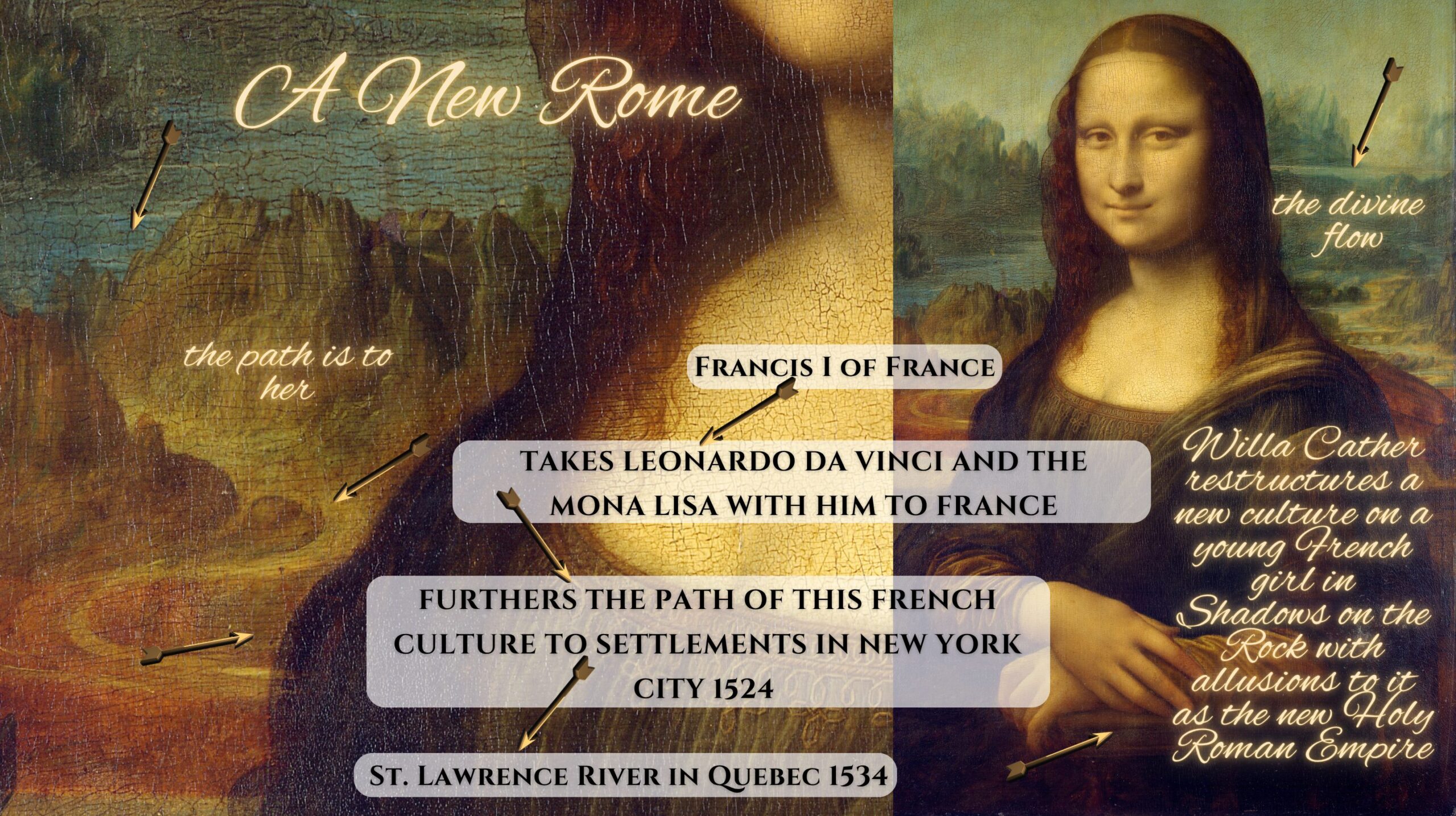
Francis I of France: the expedition of Giovanni da Verrazzano to North America. On this expedition, Verrazzano visited the present site of New York City, naming it New Angoulême; In 1534, Francis sent Jacques Cartier to explore the St. Lawrence River in Quebec to find “certain islands and lands where it is said there must be great quantities of gold and other riches.” In 1541, Francis sent Jean-François de Roberval to settle Canada and to provide for the spread of “the Holy Catholic faith.”
Ippolito de’ Medici [at firtst named Archbishop of Avignon]
Willa Cather’s Death Comes for the Archbishop and Shadows on the Rock
Photos: Willa Cather at Luxembourg Gardens (Medici), Paris, 1920; Mona Lisa
A New Rome
Francis I of France
TAKES LEONARDO DA VINCI AND THE MONA LISA WITH HIM TO FRANCE
FURTHERS THE PATH OF THIS FRENCH CULTURE TO SETTLEMENTS IN NEW YORK CITY 1524
Francis I of France: the expedition of Giovanni da Verrazzano to North America. On this expedition, Verrazzano visited the present site of New York City, naming it New Angoulême; In 1534, Francis sent Jacques Cartier to explore the St. Lawrence River in Quebec to find “certain islands and lands where it is said there must be great quantities of gold and other riches.” In 1541, Francis sent Jean-François de Roberval to settle Canada and to provide for the spread of “the Holy Catholic faith.”
St. Lawrence River in Quebec 1534
Willa Cather restructures a new culture on a young French girl in Shadows on the Rock with allusions to it as the new Holy Roman Empire
the divine flow
the path is to her
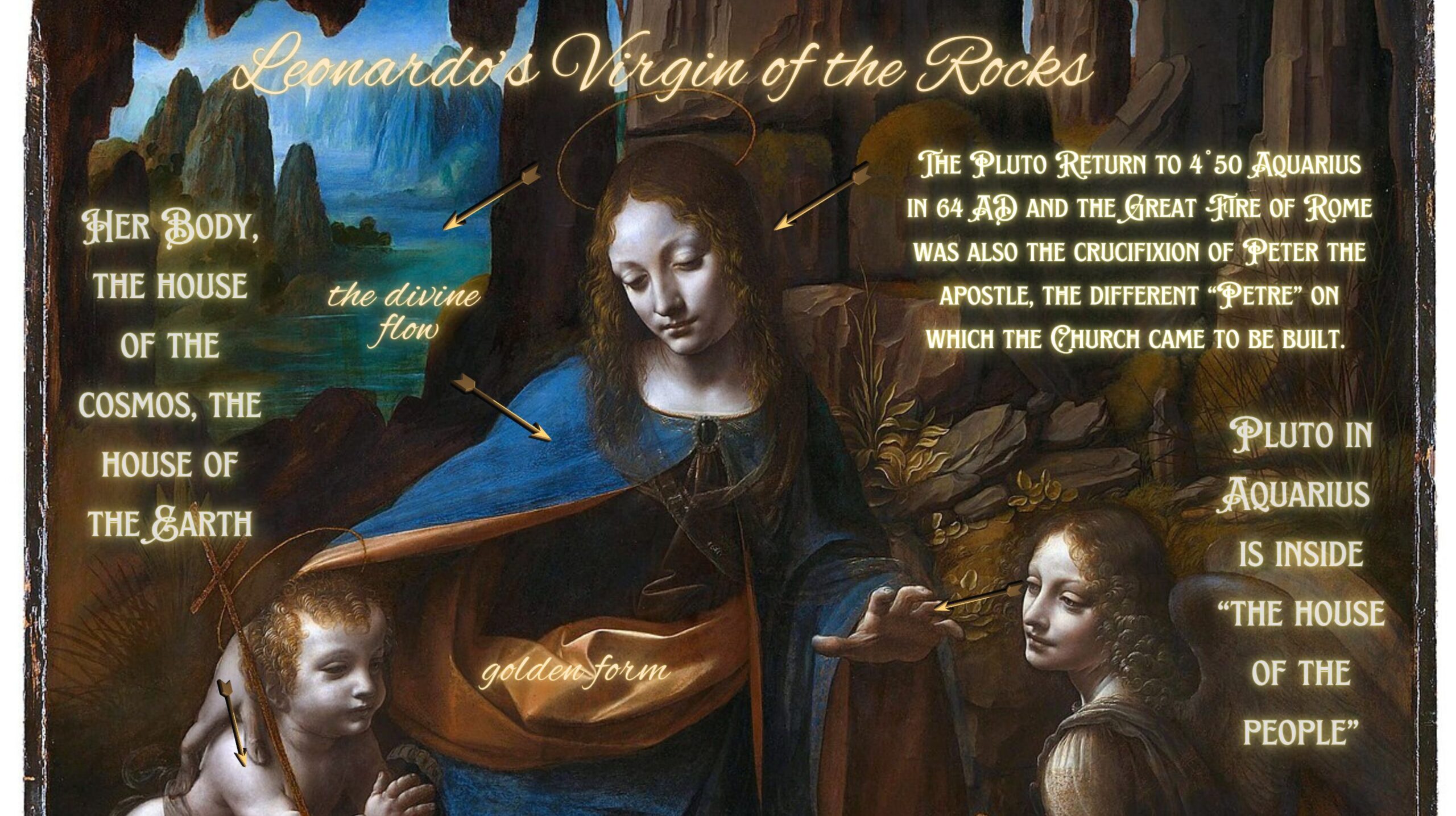
Leonardo’s Virgin of the Rocks
The Pluto Return to 4˚50 Aquarius in 64 AD and the Great Fire of Rome was also the crucifixion of Peter the apostle, the different “Petre” on which the Church came to be built.
Pluto in Aquarius is inside “the house of the people”
(Showing the blue water) the divine flow
Her Body, the house of the cosmos, the house of the Earth
Work after work Audrey gave herself fully to take on the malignant, restrictive clutches trying to take over and destroy life, liberty, and the life-opening expression of original, divine creation which opens reality brilliantly further.
Roman Holiday
Sabrina
Funny Face
The Nun’s Story
Breakfast at Tiffany’s
Charade
The Children’s Hour
Paris When It Sizzles
My Fair Lady
IT IS HERE IN THE AUSPICIOUS LINEAGE AND THE MAGIC.
Photos: Original model of Liberty Enlightening the World in Jardin du Luxembourg (Medici), Paris; and Paris When It Sizzles, 1964